

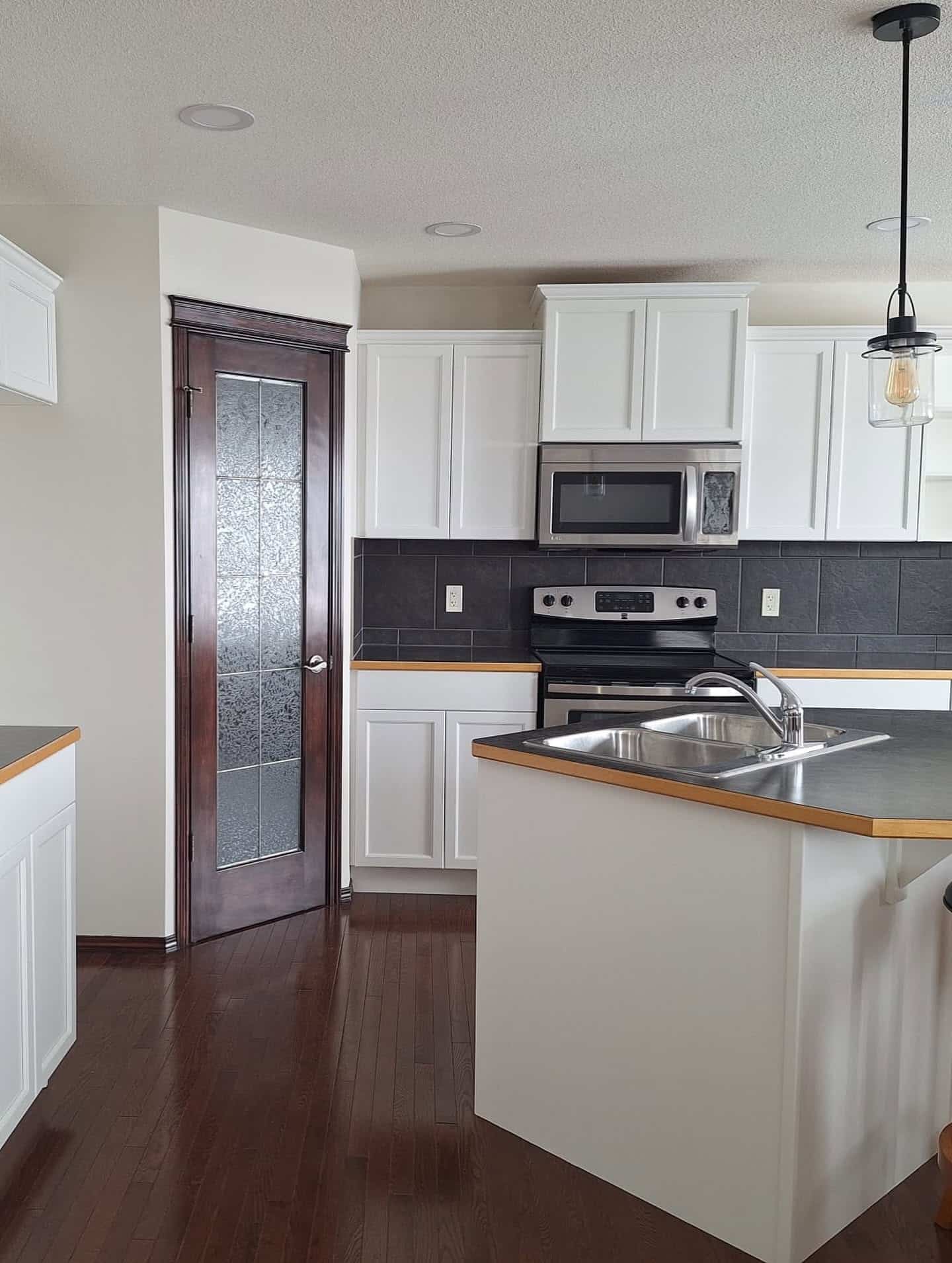
You’re getting quotes for your kitchen cabinets, and two different contractors in Calgary are telling you two completely different things. One wants to spray. The other plans to brush and roll. You’re left wondering which cabinet painting method Calgary homeowners should actually trust, and whether the technique even matters as much as the final price. It does matter, and understanding spray vs brush roll cabinet painting before you commit is one of the most practical things you can do for your kitchen. Our cabinet painting services in Calgary page covers what to expect from start to finish, but this post goes deeper on the method question specifically.
Key Takeaways
- Spray finishing delivers a smoother, more factory-like surface; brush and roll can still produce clean, long-lasting results in skilled hands
- Durability depends more on prep work than on the application tool
- Calgary kitchens face daily grease, moisture, and temperature changes that put any finish to the test
- Removing cabinet doors and painting them flat produces better results with either method
- Cleaning, sanding, and priming before any paint goes on has more impact on lifespan than the method itself
- A 5-year cabinet warrantysignals that the contractor is confident in their prep, their products, and their process
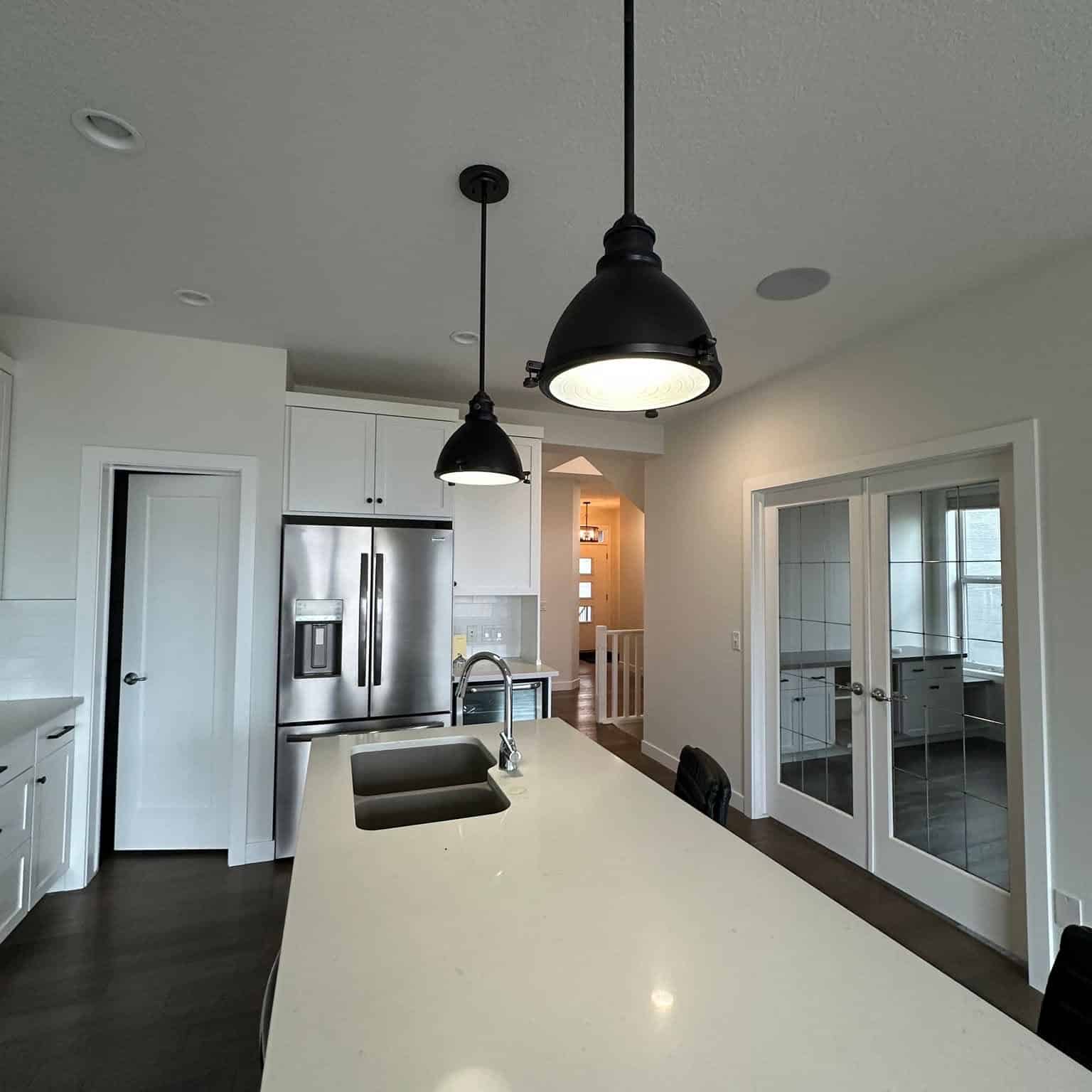
What “Spray vs Brush Roll Cabinet Painting” Actually Means
When people search for spray vs brush roll cabinet painting, they’re really asking about two physically different ways of getting paint onto a surface. The tools look different, the technique differs, and the results do, too.
Spray finishing uses an HVLP or airless paint sprayer (not aerosol cans) to break paint down into a fine mist. That mist lands on the surface in thin, even layers. The goal with spray finishing is consistency. Thin coats build evenly, cure properly, and level out as they dry. When done correctly, sprayed cabinets resemble factory finishes rather than painted furniture.
Brush-and-roll finishing uses a brush for edges, corners, and detailed profiles, and a foam roller for flat panel surfaces. This approach is more familiar and requires far less equipment. Paint is laid on in thicker passes, and the finish depends heavily on brush quality, technique, and patience between coats.
Many professional crews also prefer a hybrid approach: spray the doors and drawer fronts in a controlled environment, then brush and roll the cabinet boxes that stay fixed to the wall. Many professional cabinet painting crews use a combination, spraying doors and drawer fronts in a controlled environment while brushing and rolling the cabinet frames on-site. This hybrid method comes up often when comparing spray vs brush roll cabinet painting in real kitchens because it lets each method do what it does best.
Finish Quality: What Each Method Delivers When the Job Is Done
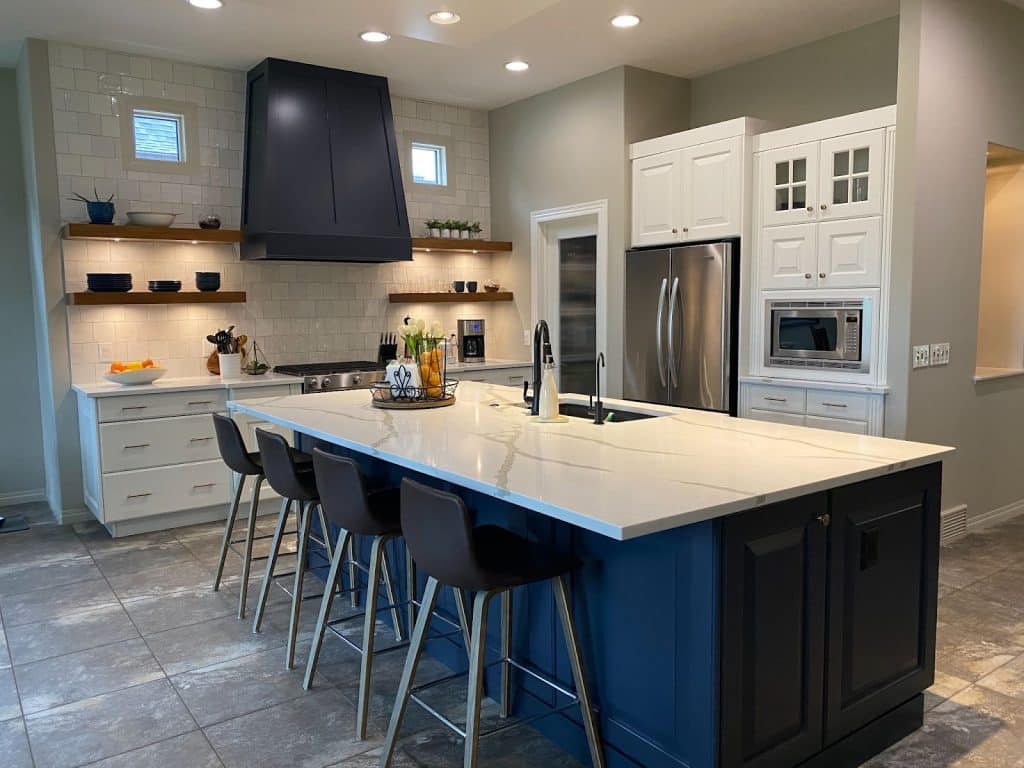
This is where spray vs. brush-and-roll cabinet painting shows its clearest visual difference. The two methods don’t produce the same surface, and that gap becomes most obvious on higher-sheen finishes or under direct kitchen lighting.
|
Factor
|
Spray
|
Brush and Roll
|
|---|---|---|
|
Surface texture
|
Smooth, no brush marks
|
May show light stipple or stroke marks
|
|
Consistency across panels
|
Very even
|
Depends on painter’s skill level
|
|
Recessed profiles and grooves
|
Covers well
|
Needs brush work; risk of buildup in corners
|
|
Sheen uniformity
|
Consistent
|
Can vary slightly between sections
|
|
Appearance under direct light
|
Clean, factory-like
|
Light texture may be visible
|
|
Touch-up ease
|
Harder to blend seamlessly
|
Easier to blend in later
|
This is where the difference between methods becomes most obvious. Spray finishing creates a smooth, uniform surface with no brush marks or roller texture. By comparison, hand painting often leaves faint brush strokes or roller stipple. These may not stand out immediately, but they become more noticeable under lighting or with higher-sheen finishes.
Even with a foam roller, you can sometimes get a slight orange peel effect, especially if the paint is too thick or you apply too much at once. That doesn’t mean brush and roll can’t look excellent. It can. But it requires more experience to execute cleanly, especially on detailed cabinet profiles with raised panels or deep grooves.
Durability: Which Method Holds Up in a Calgary Kitchen?
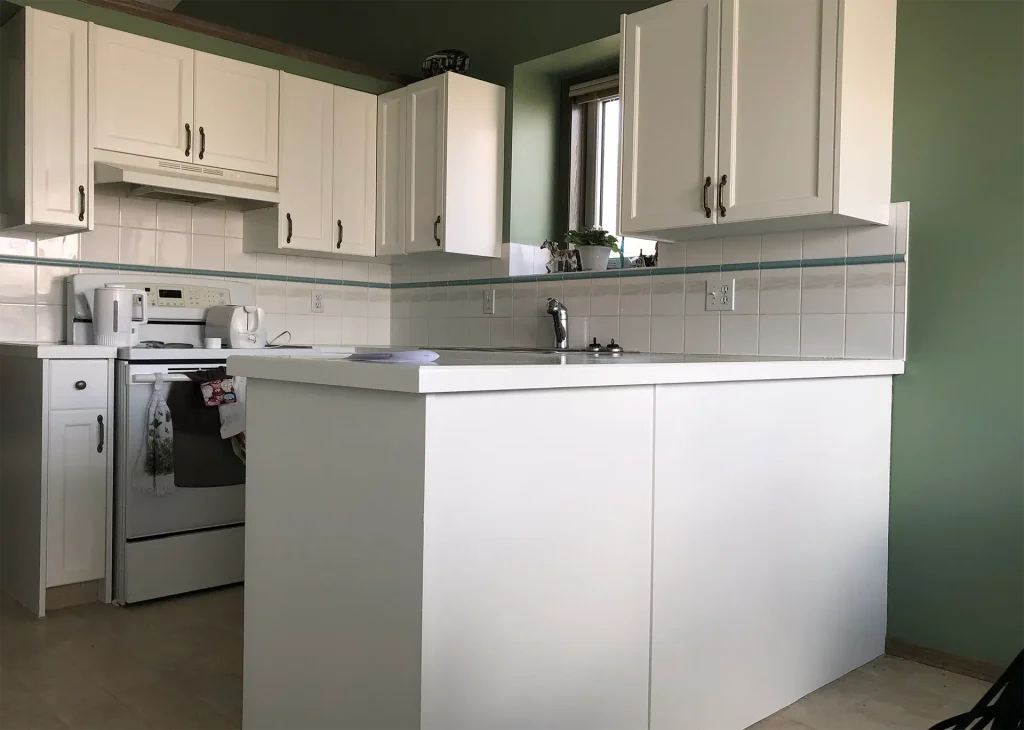
Calgary kitchens take real punishment. Daily cooking means grease, steam, and temperature changes. Cabinets near the stove and sink get wiped with degreasers, touched hundreds of times a week, and exposed to moisture that walls never see. Cabinets are high-contact, grease-exposed, moisture-adjacent surfaces that get cleaned with degreasers and wiped down repeatedly. A paint job that looks fine on a bedroom wall for ten years may start failing on a cabinet door in eighteen months if the application method creates an inconsistent film.
So when it comes to spray vs. brush-and-roll cabinet painting and how each holds up over time:
Durability depends on how evenly the coating bonds to the surface and cures. Spray application applies thinner, more consistent layers that adhere uniformly, reducing weak spots that can chip or wear prematurely. This matters most in high-touch areas like cabinet doors, drawers, and handles.
Hand-painted cabinets can still be durable, but thicker coats are more prone to uneven curing. Over time, this can lead to visible wear patterns, edge cracking, or paint failure in frequently used areas.
The key thing to understand is that the method alone doesn’t determine how long your finish lasts. Prep work plays a bigger role. More on that in the next section.
Why Prep Work Matters More Than Which Tool a Painter Uses
Whether a contractor sprays or brushes and rolls, the work they do before a single drop of paint goes on affects longevity more than the tool they use. This part of the spray vs brush roll cabinet painting conversation gets skipped too often.
Proper paint preparation is the foundation for smooth, durable, professional-quality finishes. Without correct surface prep, even premium paint can fail prematurely.
A proper cabinet prep process includes:
-
Degreasing all surfaces to remove cooking oils and residue that build up over years of use.
-
Sanding to scuff the existing finish so the primer has something to grip.
-
Filling any dings, small cracks, or gaps in the wood before any primer goes on.
-
Priming with a product suited to the cabinet material (not just any wall primer).
-
Allowing proper dry time between every coat, without rushing.
Skipping or rushing any step reduces adhesion and shortens the finish’s life, especially in kitchens and baths where moisture, oils, and frequent cleaning are the norm.
If you skip prep or rush through it, the paint won’t bond well, and the finish will chip easily over time.
Spray finishing also requires more setup time, not less. Doors need to come off their hinges, all surrounding surfaces need to be carefully masked, and ideally the doors are painted flat to prevent runs. Brush and roll requires less masking but demands more skill and patience during application.
For a closer look at what goes into priming before a cabinet project, our post on how many coats of primer you need breaks it down in plain terms.
Spray vs Brush Roll Cabinet Painting: A Side-by-Side Breakdown
|
|
Spray
|
Brush and Roll
|
|---|---|---|
|
Finish smoothness
|
Very smooth, factory-like
|
Good, but may show light texture
|
|
Setup and masking
|
Significant (doors off, full masking)
|
Moderate
|
|
Paint consumption
|
Uses more paint per coat
|
Uses less paint
|
|
Best suited for
|
Flat/modern doors, full kitchen sets
|
Cabinet boxes, traditional profiles, smaller jobs
|
|
Main risk factors
|
Drips or runs without training; overspray
|
Brush marks, orange peel from thick coats
|
|
Practical for in-home use?
|
Possible with thorough protection
|
Yes, more manageable on-site
|
|
Durability (with good prep)
|
High
|
High
|
|
Touch-up down the road
|
Harder to blend
|
Easier to match and blend
|
Brush painting works better on cabinets with intricate trim, molding, or raised panels. Brushes reach into recesses that sprayers may miss, making it a practical choice for detailed or vintage cabinetry.
Sprayed finishes form thin, strong layers that resist chipping and wear when cured properly. They retain their smooth look longer under heavy use.
Both methods, done correctly by an experienced painter, can produce a finish worth paying for. The deciding factor is usually the cabinet style, the kitchen layout, and what the homeowner wants the final look to feel like.
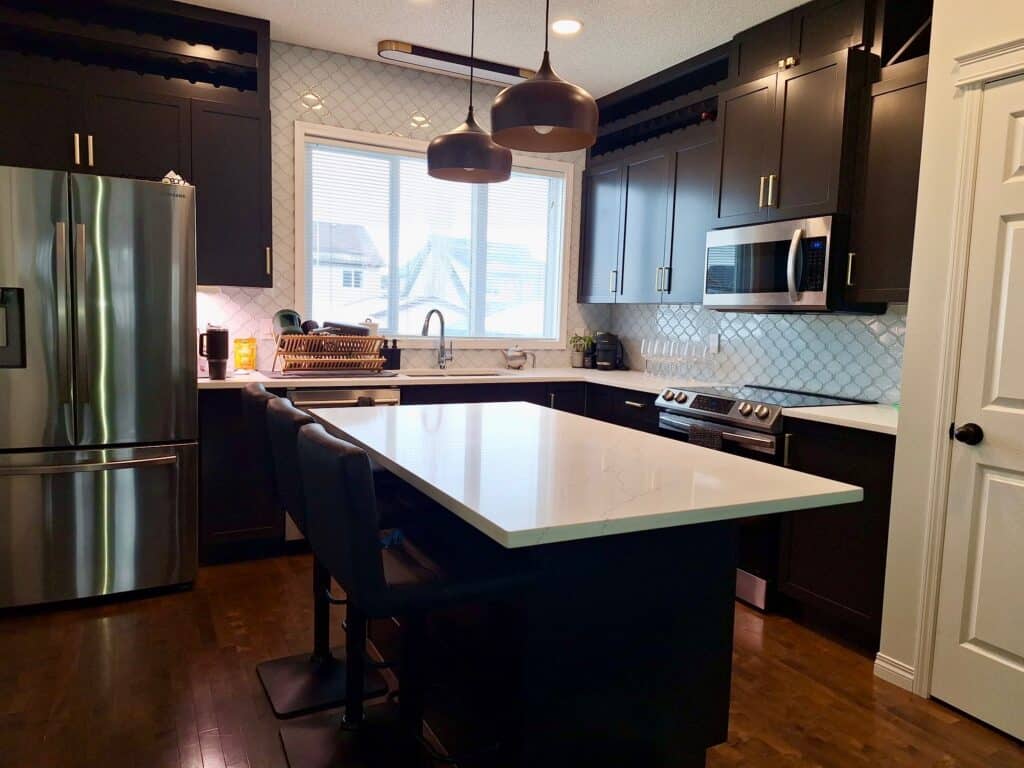
Which Method Works Best for Your Cabinet Style?
The right approach depends on your cabinet type, your kitchen setup, and the finish you want to live with for years. Here’s how to think through the decision:
Spray finishing tends to work well when:
-
You have flat, slab-style, or shaker-style modern cabinet doors
-
You want a finish that closely resembles factory-finished cabinetry
-
The painter can remove the doors and work in a controlled environment
-
You’re doing a full kitchen (the efficiency of spray pays off at scale)
Brush and roll tends to work well when:
-
Your cabinets have raised panels, intricate profiles, or ornate detailing
-
The project is a smaller scope (a bathroom vanity or a partial wall of cabinets)
-
You prefer a slightly softer, hand-finished look that fits the character of the home
-
Interior design professionals sometimes specify cabinets with more traditional designs to be brush-finished, even preferring it over a manufactured-sprayed appearance.
The hybrid approach tends to work well when:
-
Cabinet boxes stay fixed to the wall and get brush-finished and rolled on-site
-
Doors can be removed and sprayed flat in a separate area or off-site
-
You want the smooth factory look on the most visible surfaces without turning your whole kitchen into a spray booth
For homeowners in Calgary, Airdrie, and Cochrane with modern flat-panel kitchens, spray is the finish of choice for most projects. For older homes with traditional raised-panel cabinetry, a skilled brush-and-roll job or a hybrid approach can deliver results that match the home’s character without chasing a factory look that doesn’t fit.
You might also find it helpful to read our breakdown of painting kitchen cabinets vs. replacing them before deciding on a cabinet painting method, especially if you’re weighing cost against outcome.
How Neighbourhood Painters Handles Cabinet Finishing in Calgary?
At Neighbourhood Painters, spray vs brush roll cabinet painting is not a blanket policy. The crew evaluates each kitchen on its own terms: cabinet style, layout, the homeowner’s finish goals, and which approach will hold up through years of real kitchen use.
The team has been serving Calgary and the surrounding areas since 2003. That means they’ve painted traditional raised-panel cabinets in older Cochrane homes, modern flat-slab kitchens in newer Airdrie developments, and everything in between. Cabinet work spans Calgary, Airdrie, Bearspaw, Cochrane, and Chestermere. Each home gets the method that fits, not the one that’s fastest for the crew.
Every cabinet project comes backed by a 5-year warranty. That’s a meaningful commitment because it means the team has to get the prep right, use the correct primer, and apply the right number of coats. If the finish fails within that window, the team comes back.
Neighbourhood Painters is also a BBB-accredited business, giving homeowners an independent benchmark when comparing contractors.
If you want to know how long a painted cabinet finish realistically lasts once the job is done, our post on repainting kitchen cabinets in Calgary covers realistic timelines based on local conditions and use patterns.
Ready to Get a Straight Answer on Your Cabinet Project?
If you’ve been thinking about your kitchen cabinets and want to know which approach makes the most sense for your specific home, Neighbourhood Painters Ltd is ready to take a look. The team provides free estimates and will walk you through the right method, prep steps, and products for your cabinets before any work begins.
Schedule your free consultation today and get a clear plan for your cabinet project. Call us now at (403) 978-2257.