

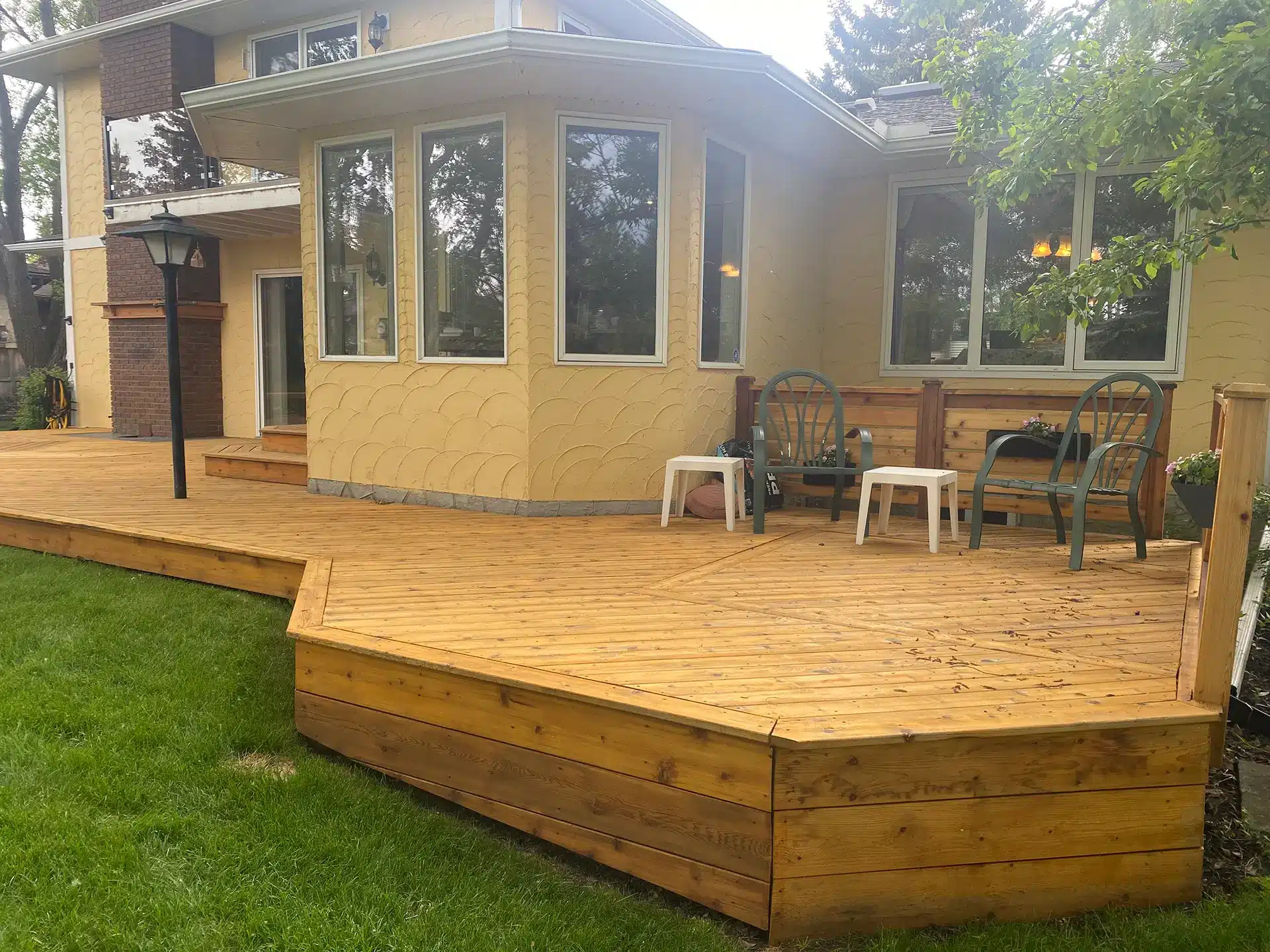
I’ve spent years doing deck staining Calgary homeowners count on to get their wood through brutal winters, and one question comes up more than any other: paint or stain? The deck paint vs stain debate matters more here than almost anywhere else in Canada, because our freeze and thaw swings chew through weak finishes fast. At Neighbourhood Painters, our deck and fence painting work exists because too many decks in this city get one coat and then a full season of damage before anyone notices. The choice you make this fall can decide whether you’re recoating next spring or in three years.
Key Takeaways
- Calgary sees roughly sixteen freeze and thaw swings every winter, and each one stresses whatever finish is on your deck.
- Paint sits on top of the wood as a film; stain soaks into the fibers instead, based on Canadian Wood Council research on wood and moisture.
- Paint hides wear for longer, then tends to fail all at once with cracking and peeling.
- Stain wears down gradually and is easier to touch up in small sections.
- South-facing decks in Calgary need fresh protection roughly every two years; north-facing decks can often go three to four.
- Waiting past the first crack usually turns a simple recoat into a full strip-and-refinish job.
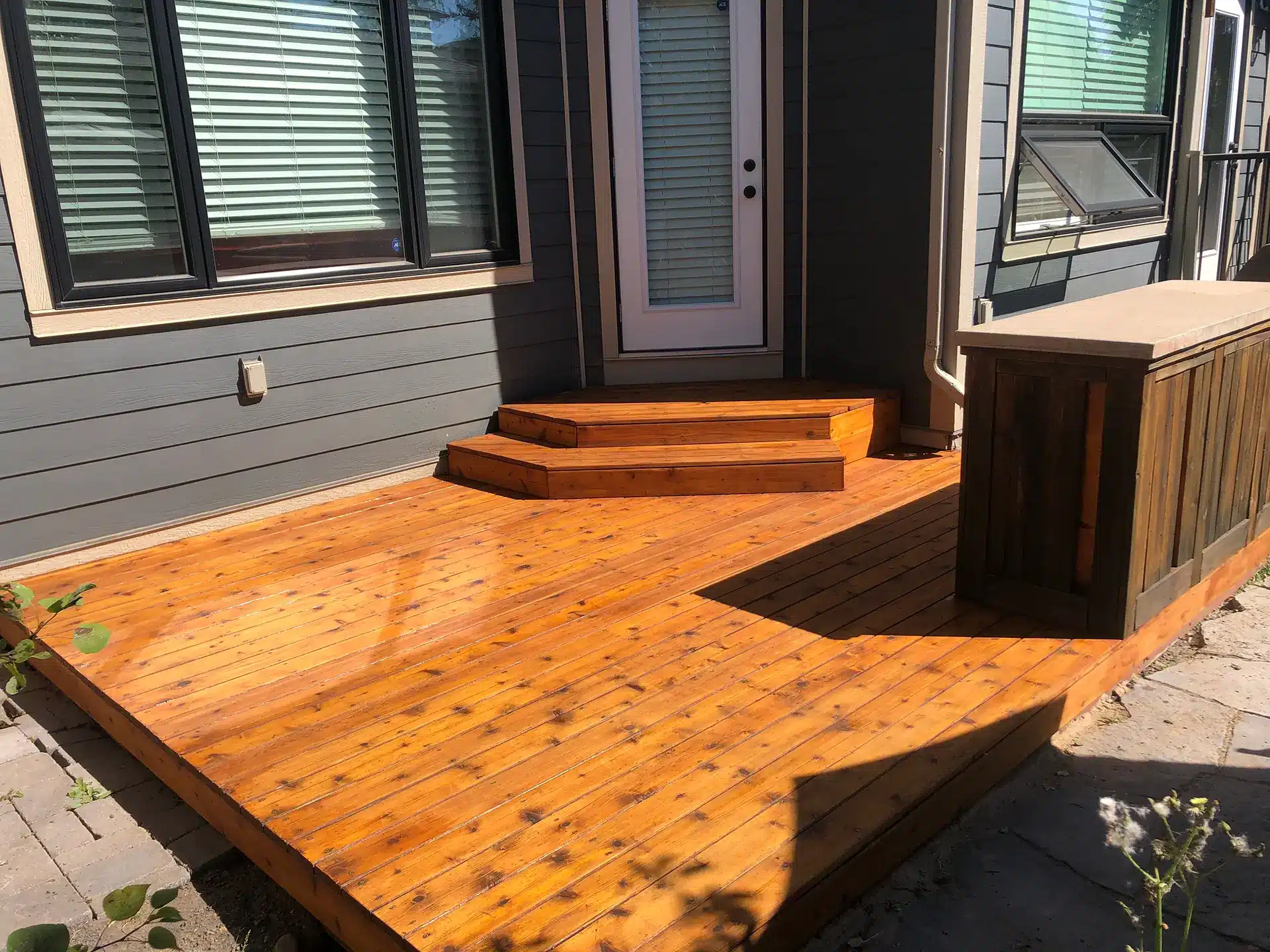
Why Alberta Winters Are Hard on Any Deck Finish
Calgary does not get a normal winter. We get a string of them, sometimes in the same week. Environment Canada records put our average low around minus 31 degrees Celsius, and then a Chinook rolls in and pushes the temperature up 20 or 30 degrees within a day. A City of Calgary climate report found the city experiences about sixteen freeze-thaw cycles every winter, each one a small round of expansion and contraction inside the wood itself. That constant swelling and shrinking is what tears a weak coating apart, not the cold alone. A deck finish that holds up fine in Vancouver or Toronto can fail here in a single season, because those cities rarely see the same swing between thaw and deep freeze.
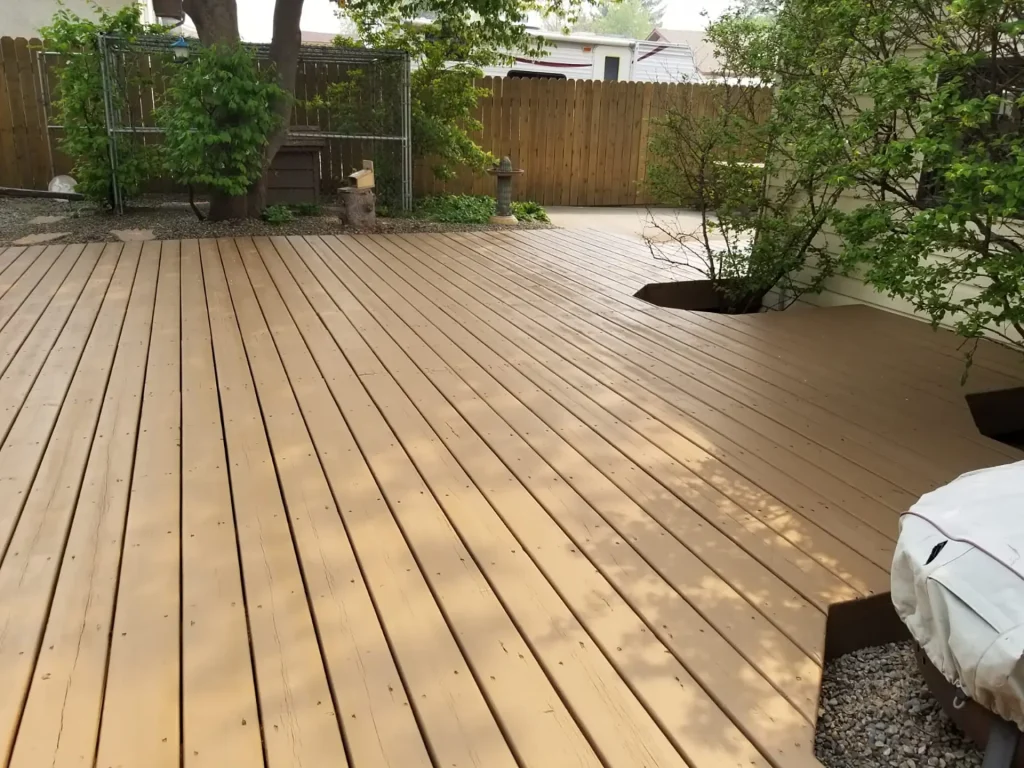
The Real Question Behind Deck Paint vs Stain
Most homeowners who call me are not really asking about chemistry. They are asking because they already spent a weekend and a few hundred dollars refinishing a deck, and it let them down. Some watched paint bubble and peel by the second summer. Others watched stain fade to almost nothing after one hard winter. That frustration is fair, and it usually comes down to picking the wrong product for a north-facing or south-facing deck, not from doing the work wrong. If you have not run into this yet, the goal here is simple: to help you skip the trial and error.
Deck Paint vs Stain: A Side-by-Side Look for Calgary Conditions
|
Factor
|
Deck Paint
|
Deck Stain
|
|---|---|---|
|
How it protects wood
|
Forms a solid film on the surface
|
Soaks into the wood fibers
|
|
Appearance
|
Solid color, hides grain and wear
|
Lets the natural grain show through
|
|
Freeze-thaw behavior
|
Can crack and peel once the film loses flexibility
|
Wears gradually, less likely to peel in sheets
|
|
Typical recoat schedule*
|
Every 2 to 4 years depending on exposure
|
Every 2 to 4 years depending on exposure
|
|
Repair when it fails
|
Usually needs scraping and a full repaint
|
Can often be touched up in sections
|
|
Works well for
|
Decks where you want a uniform, painted look
|
Decks where you want the wood to still look like wood
|
*Based on the maintenance schedule we use for Calgary decks: south-facing surfaces roughly every two years, north-facing surfaces every three to four years.
Neither option is wrong on its own; the mismatch happens when you use the wrong one on the wrong deck. A solid paint film on a heavily shaded, damp, north-facing deck can trap moisture underneath it, which is exactly what leads to rot. A thin stain on a deck that takes direct afternoon sun for six months might fade before the next Calgary winter even shows up.
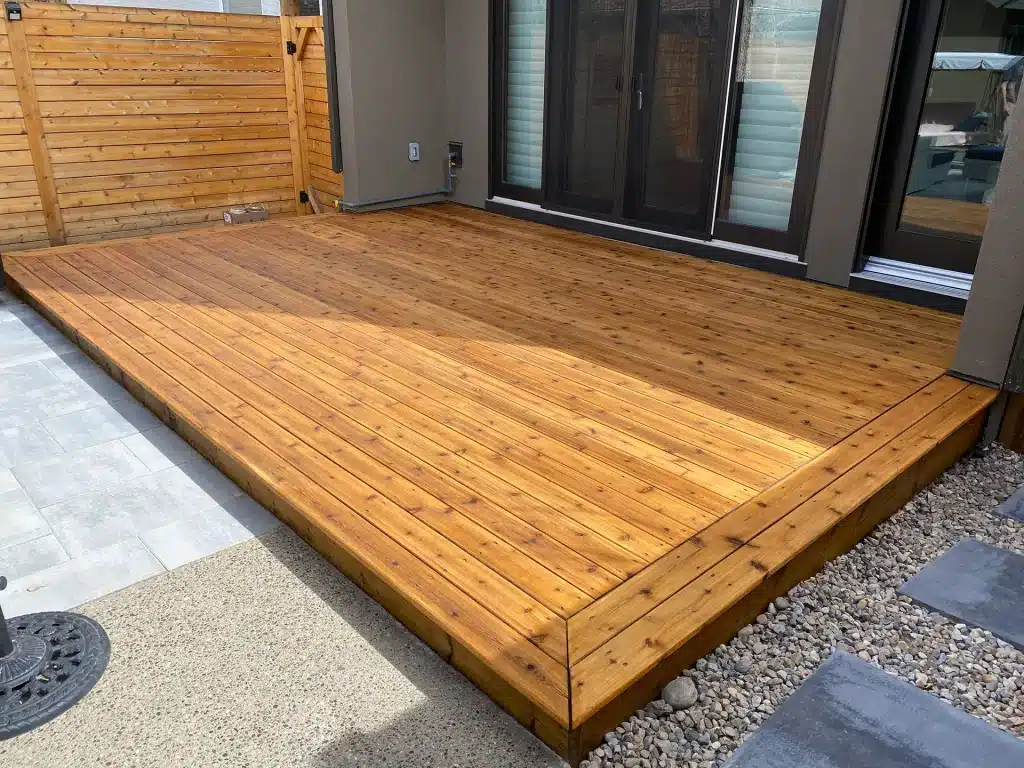
What the Wood Itself Is Telling You
Wood is not a fixed material. It swells when it absorbs moisture and shrinks as it dries out, and research from the Canadian Wood Council points to that constant movement as the real driver behind coating failure, not just sun exposure or age. A finish that cannot flex with the wood underneath it is fighting a losing battle from day one. That is why the paint-versus-stain choice isn’t really about looks. It is about picking a finish that can move with a deck that is already moving on its own, twelve months a year.
Reading Your Own Deck Before You Choose a Finish
Not every deck in Calgary needs the same answer, because not every deck sees the same weather. A deck that faces south spends its summer under direct sun and its winter absorbing whatever heat a chinook brings, then freezes hard again overnight. That kind of swing pushes any finish harder, which is why we recommend fresh protection roughly every two years on south-facing decks. A deck that faces north stays shaded and cooler most of the year, so the same coat can often last three to four years before it needs attention. Knowing which direction your deck faces tells you more about which finish will last than any product label does.
Signs Your Deck Won't Make It Through This Winter
A few things worth checking before the snow arrives:
-
Paint that is cracked, chalky, or peeling in sheets rather than fading evenly.
-
Bare wood showing through in high traffic spots like stairs or the main walking path.
-
Water that soaks in right away instead of beading on the surface.
-
Gray, silvery patches where old stain has worn away completely.
-
Boards that feel soft, spongy, or slightly swollen when you press on them.
Any one of these alone is not an emergency, but two or three together usually mean the current finish will not survive another freeze-thaw cycle.
What I Recommend for Calgary Decks
Here is how I walk homeowners through it. First, look at which way your deck faces and how much direct sun it gets. Second, check the wood itself for the signs above, since a deck with bare or soft spots needs different prep than one that is just faded. Third, match the finish to what you actually want: paint if you want a clean, uniform color and don’t mind full-repaint touch-ups down the line, or stain if you want the wood to keep looking like wood and prefer touching up sections as needed. Our deck and fence painting work follows that same maintenance schedule: a quick wash and a fresh coat every two years for south-facing decks and every three to four for north-facing ones. Getting the prep and product matched to your deck’s exposure is what actually makes a finish last, more than the brand on the can.
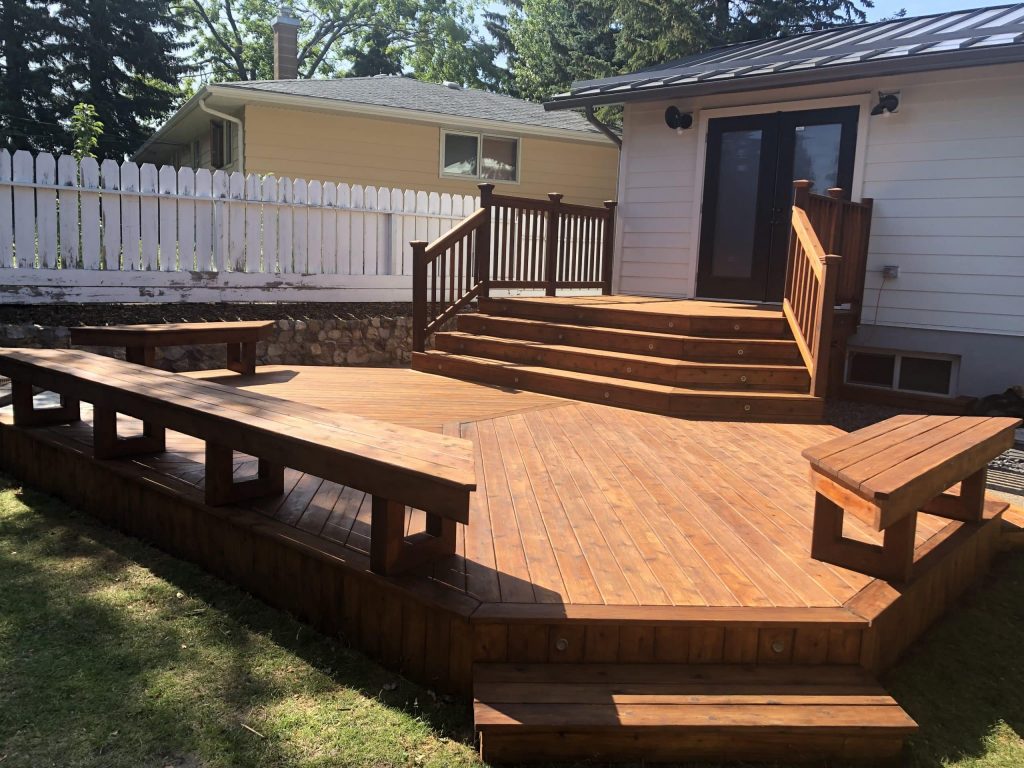
What Happens If You Wait
Skipping a recoat this fall does not just mean another season of a tired-looking deck. Once water gets past a cracked or worn finish, it sits inside the wood through the winter, freezes, expands, and works the boards apart from the inside. What would have been a simple wash and recoat in October can turn into replacing individual boards, or the whole deck, by next summer. That is the real cost of letting a finish fail: not the price of paint or stain, but the price of the wood underneath it.
Getting Your Deck Ready Before the Snow Flies
If you’re in Calgary, Airdrie, Cochrane, Bearspaw, Chestermere, or Okotoks, the same freeze-and-thaw math applies to your deck, whatever direction it faces. Whether you land on paint or stain, the work goes faster and lasts longer when someone checks the wood first and matches the product to it. A deck that gets the right finish before winter is one less thing to worry about once the chinooks and cold snaps start trading places. Our deck and fence painting team can look at your deck, tell you plainly whether paint or stain fits it better, and get the work done before the weather turns.
Call us at (403) 978-2257 or reach out through the site, and we’ll walk you through what your deck actually needs this year.